
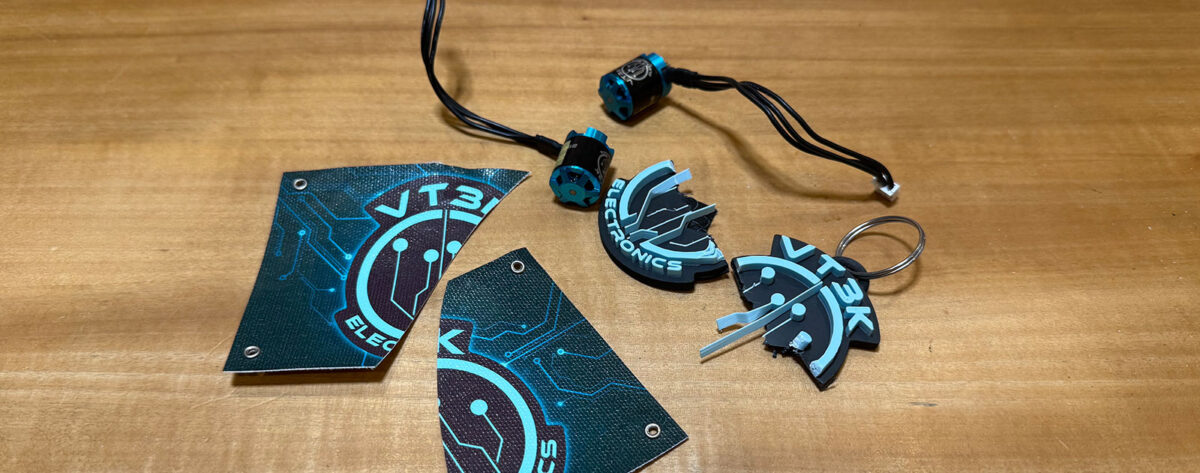
VT3K Motor Review: Failure Case & Support Experience
This article documents my experience with two VT3K brushless motors, including test results and communication with customer support.
It is not intended as a product review in the traditional sense, but rather a record of my ownership experience, testing process, and support interactions.
The goal is simply to present the facts and allow readers to review the evidence for themselves.
Original Motor
The original motor did not power on from the very first connection.
It produced no startup beep, which normally occurs when power is applied.
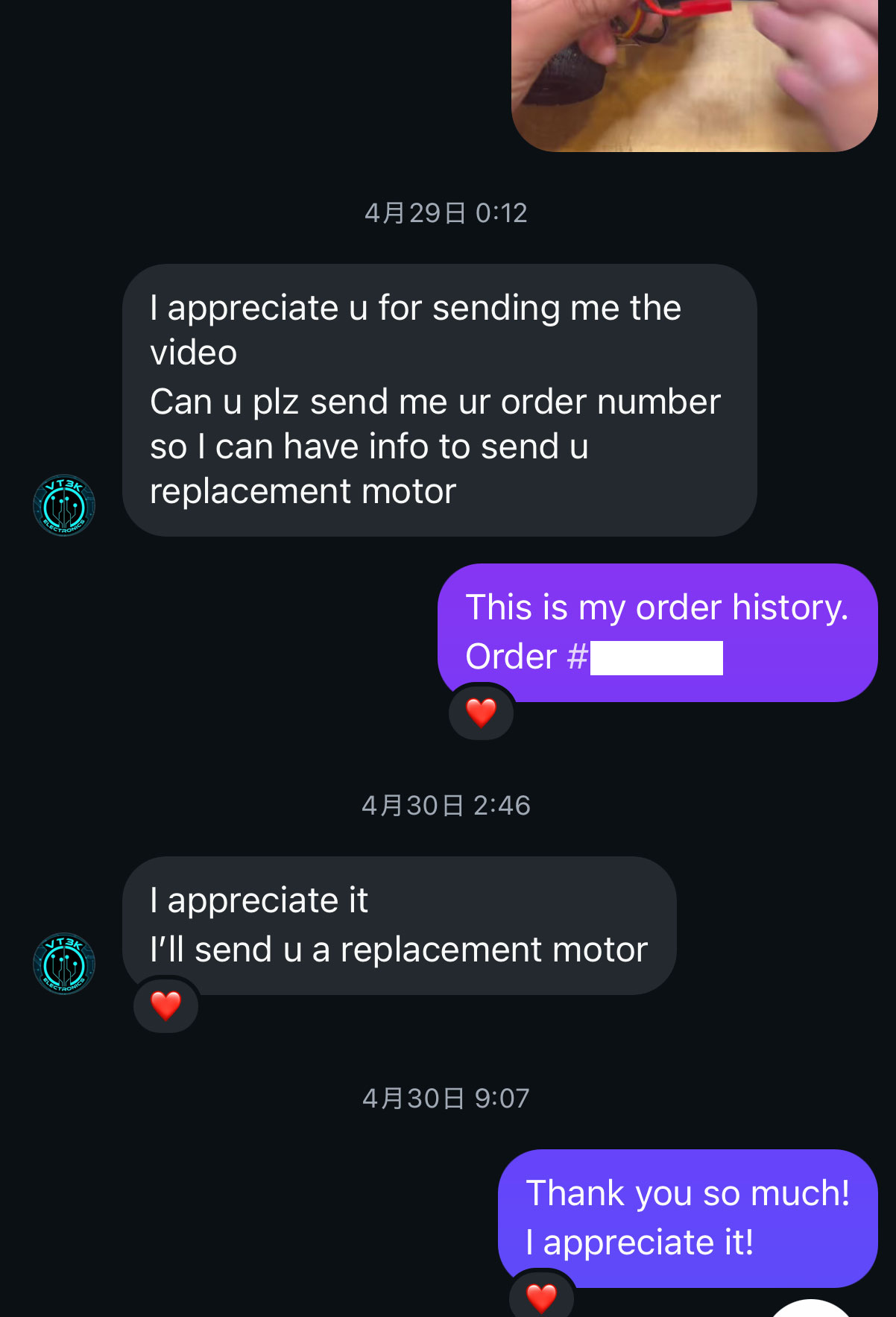
I recorded a video showing the issue and contacted VT3K support.
After reviewing the video, VT3K agreed to send a replacement motor.
Replacement Motor
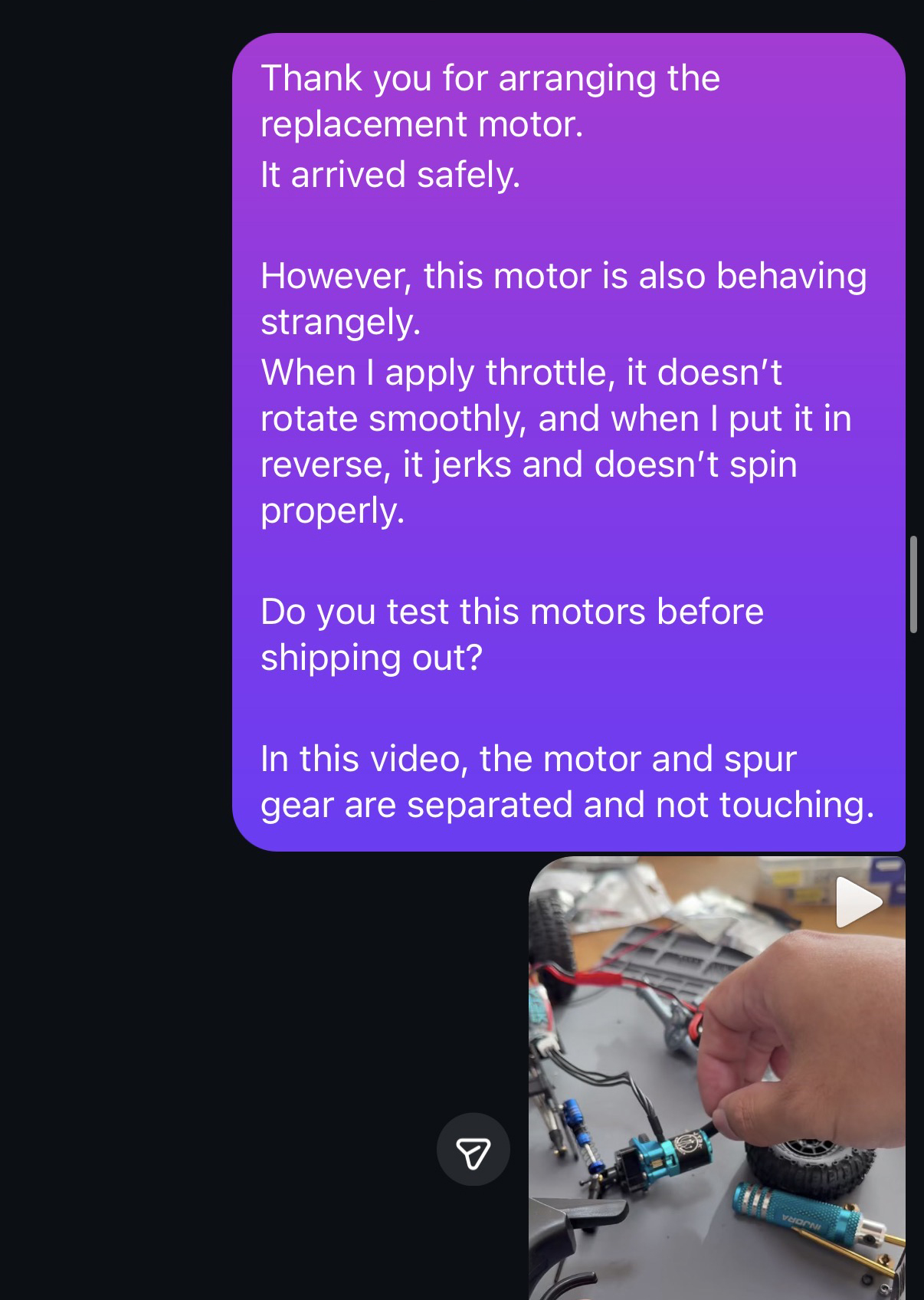
The replacement motor arrived and powered on, but its behavior appeared abnormal from the first connection.
To isolate the cause, I performed a series of comparison tests using the same SCX24 platform, electronics, and multiple motors.
I recorded the test results and shared the videos with VT3K.
During the support conversation, several possible causes were discussed, including the radio system, receiver, battery, and power delivery.
The test results and support conversation are documented in the following sections.
Comparison Testing Results
To isolate the cause, I tested the replacement motor using multiple receivers, ESCs, batteries, and comparison motors while keeping the rest of the setup unchanged whenever possible.
Test Platform
SCX24
Radio System Tested
FlySky GT5 transmitter
Multiple FlySky-compatible nano receivers
ESCs Tested
VT3K Escape32 ESC
Mofo RC RockWolf ESC
Batteries Tested
Multiple fully charged batteries
Results
- MOFO motor operated normally
- Furitek motor operated normally
- VT3K original motor failed
- VT3K replacement motor failed
Discussion of Possible Causes
Based on these test results, I asked why only the VT3K motors displayed the issue while other motors functioned normally under the same conditions.
During the discussion, VT3K suggested several possible causes, including:
Radio system and Receiver issues
Battery or power delivery issues
The possibility that both motors were experiencing the same underlying problem
In response, I provided additional information regarding the test setup and comparison results.
Despite those discussions, I was unable to obtain a technical explanation that matched the observed test results.
Radio system and Receiver issues
One of the first possible causes suggested by VT3K was the radio system or receiver.
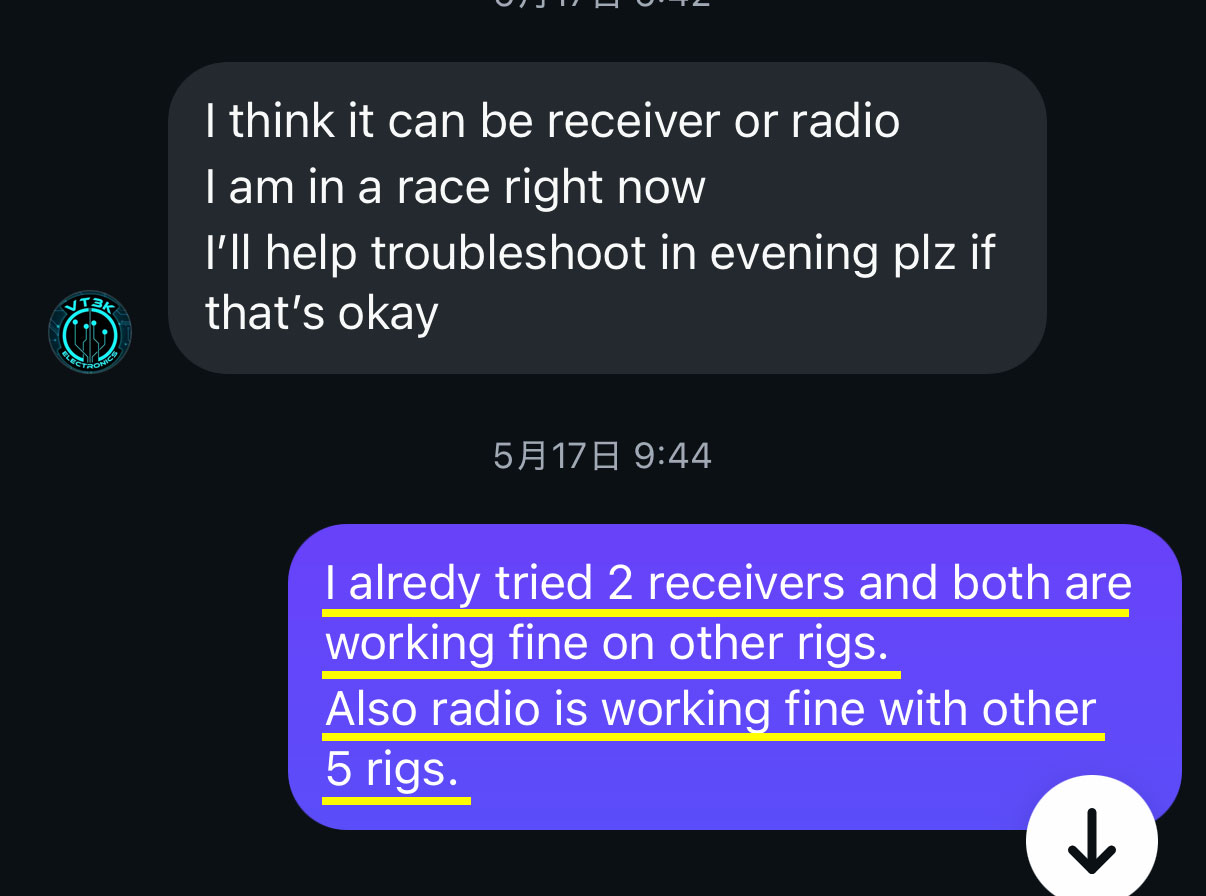
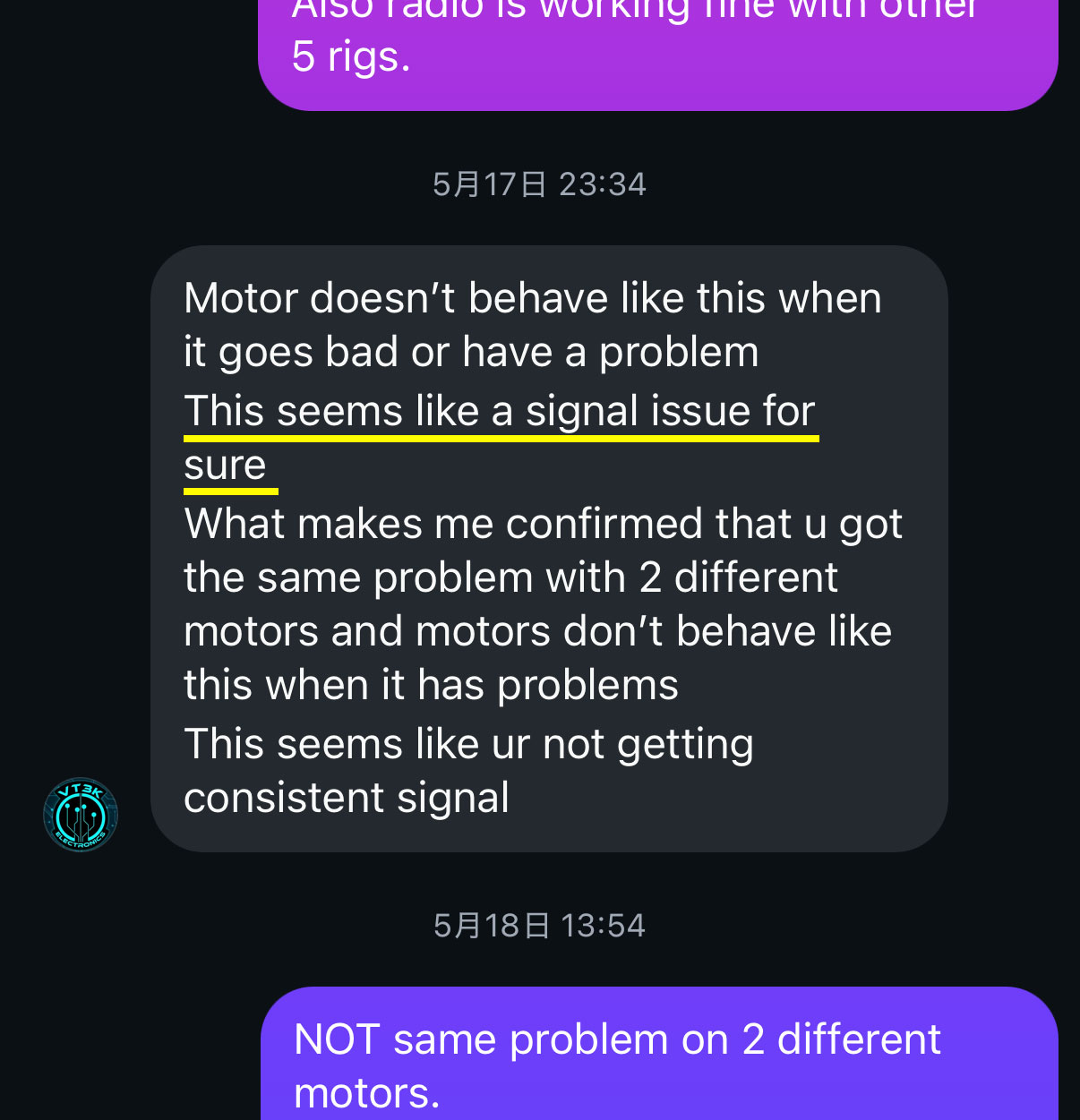
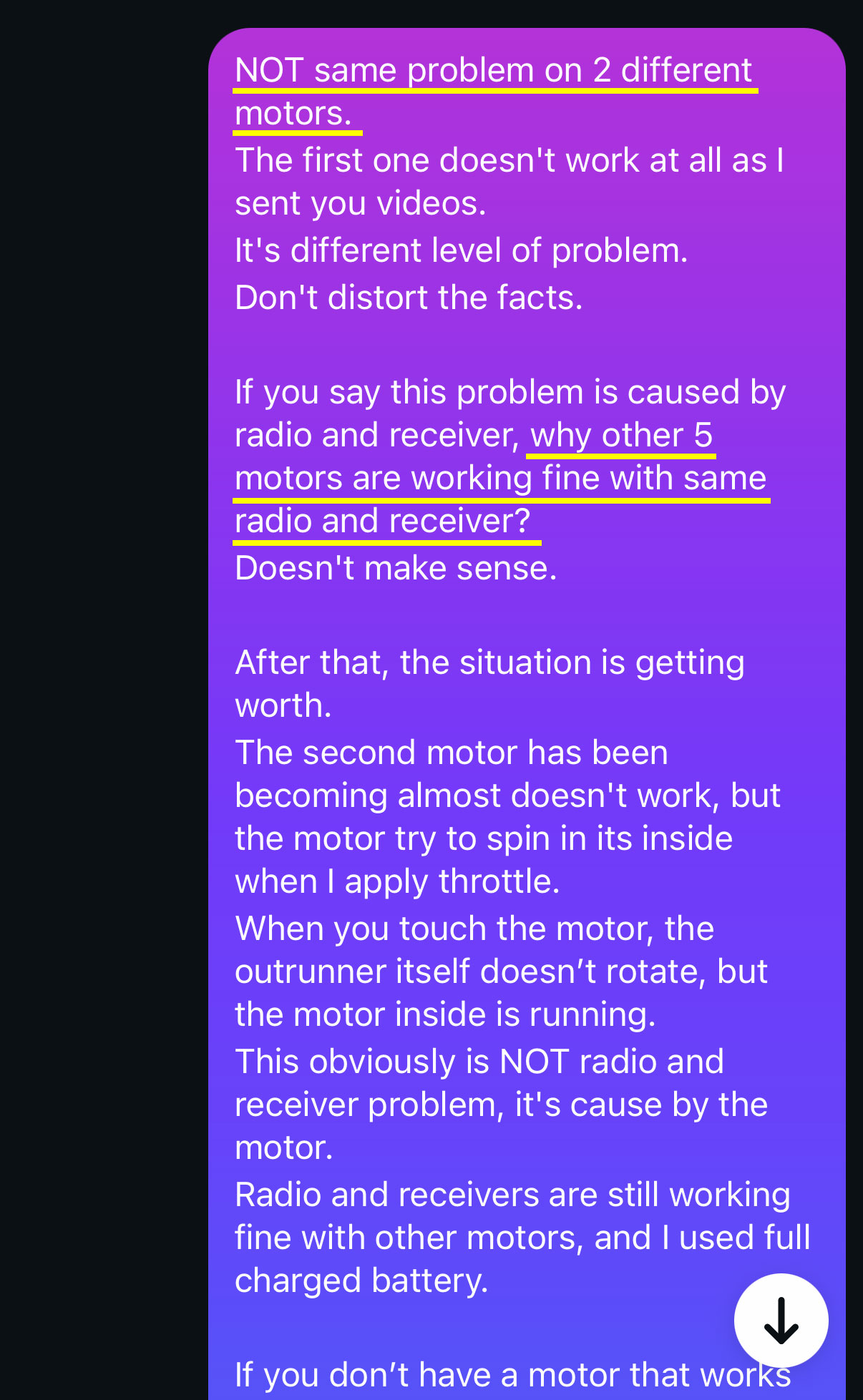
In response, I explained that I had already tested multiple receivers and that the same radio system was functioning normally with several other vehicles.
VT3K later stated that the behavior appeared to be a signal-related issue and suggested that both motors were experiencing the same underlying problem.
At that point, I was unable to understand how the radio system could be the root cause when only the VT3K motors displayed the issue.
Warranty Discussion
After multiple discussions regarding possible technical causes, the conversation shifted toward warranty coverage.
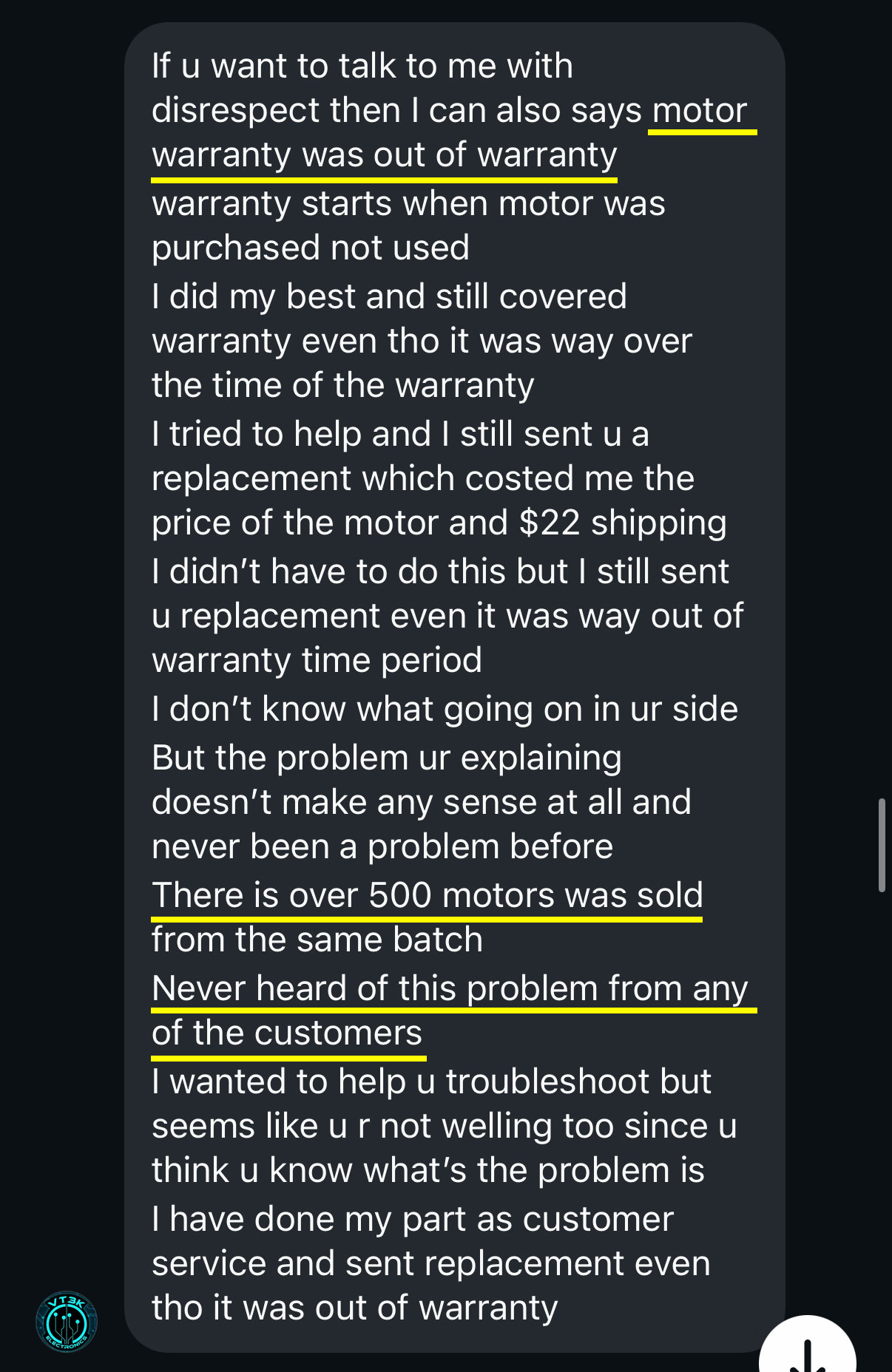
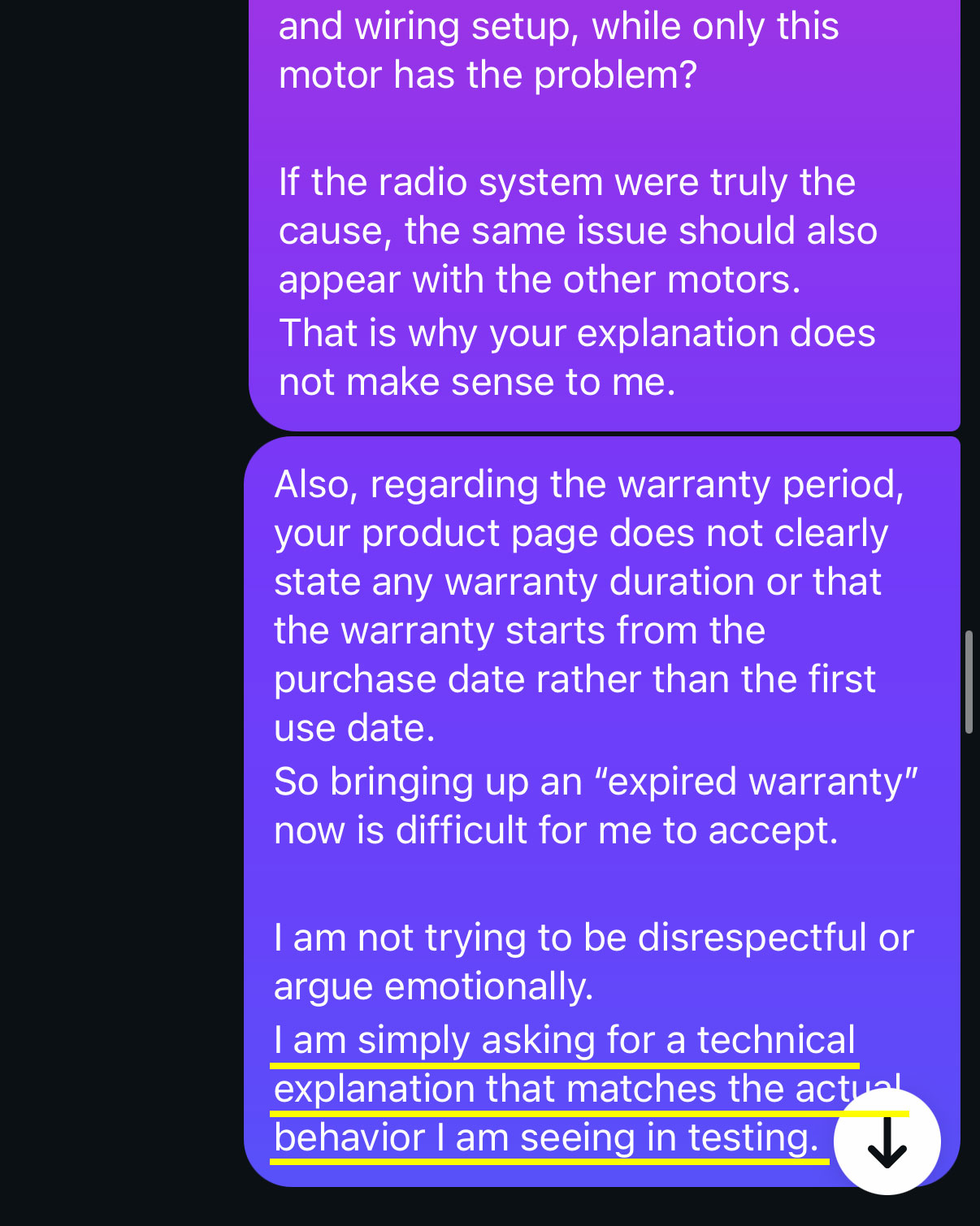
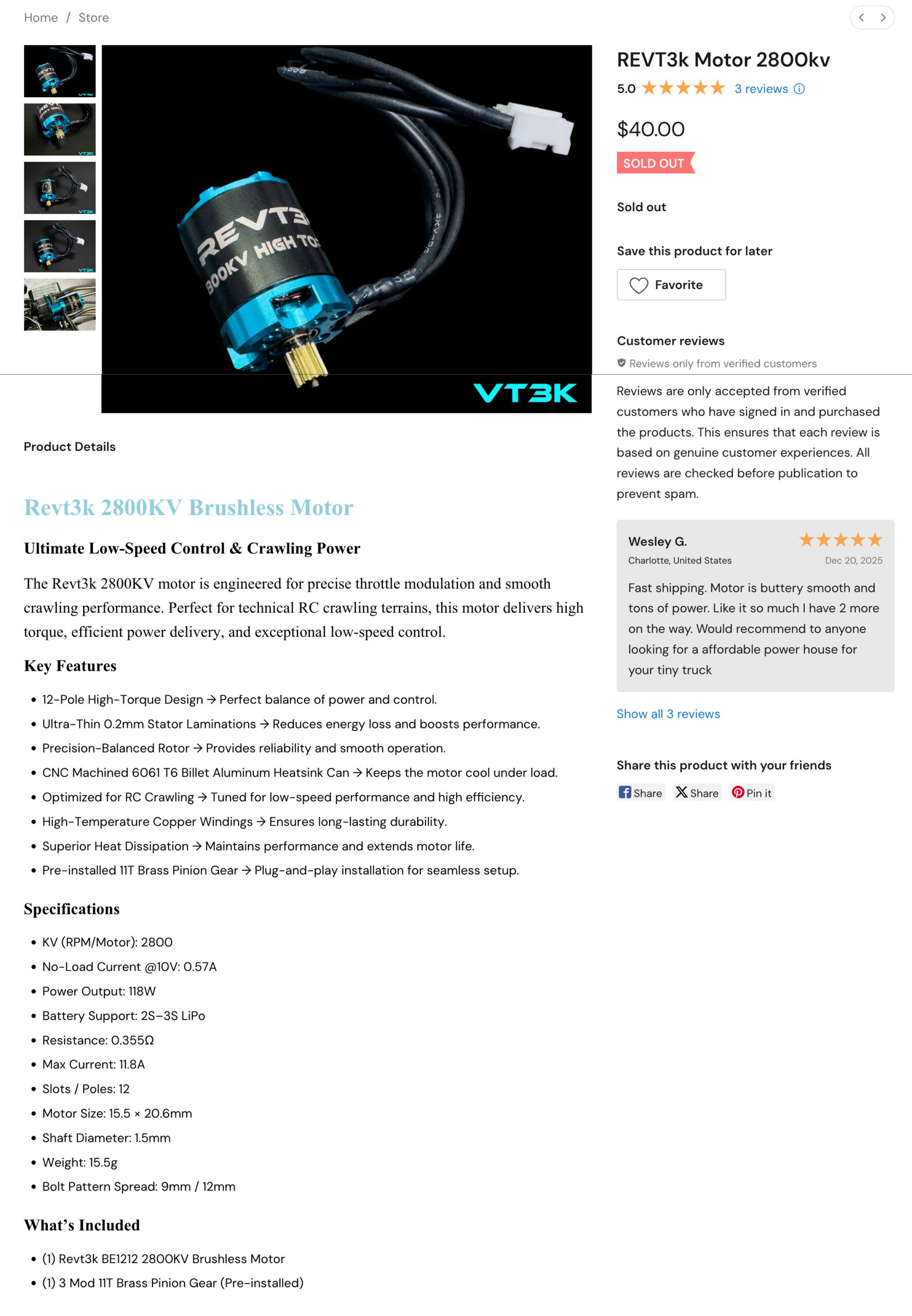
VT3K stated that the motor was outside the warranty period.
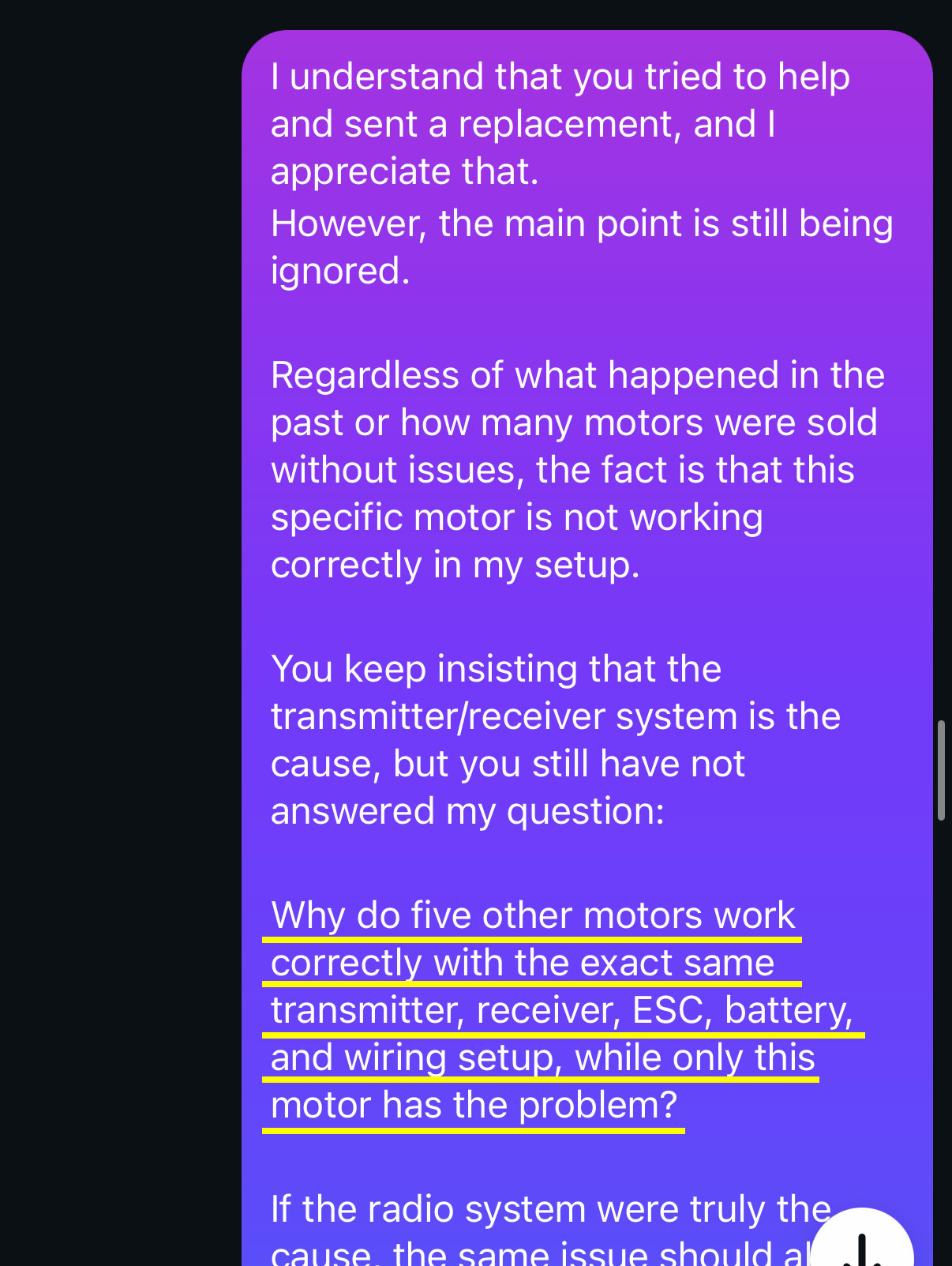
I pointed out that I could not find any clearly stated warranty duration on the product page and questioned how customers were expected to know the applicable warranty coverage.
The following screenshots show the warranty discussion and my response.
Battery or Power Delivery Issues
After the warranty discussion, communication stopped for a period of time.
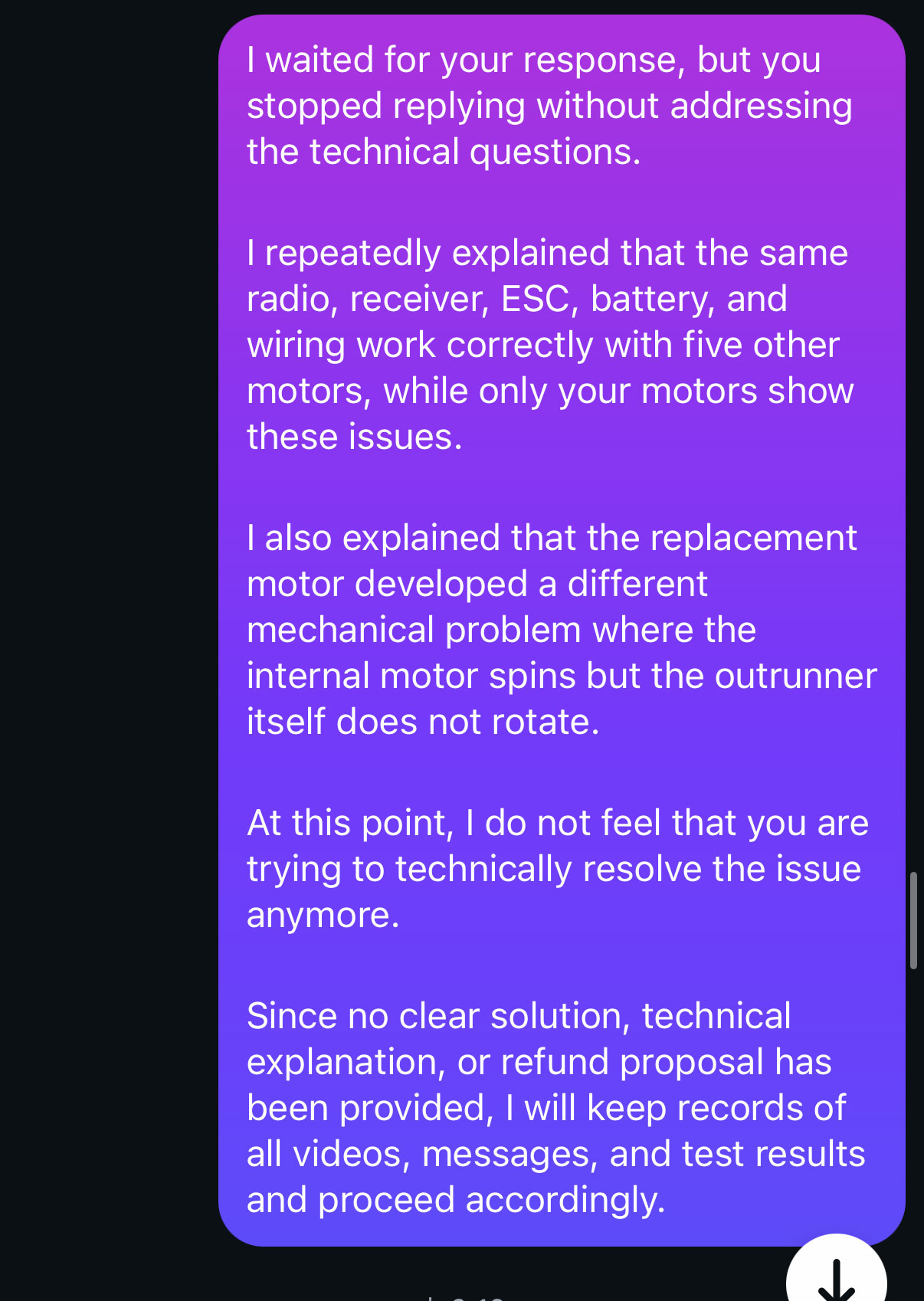
When the conversation resumed, VT3K suggested that the videos appeared to show an underpowered motor or a battery-related issue.
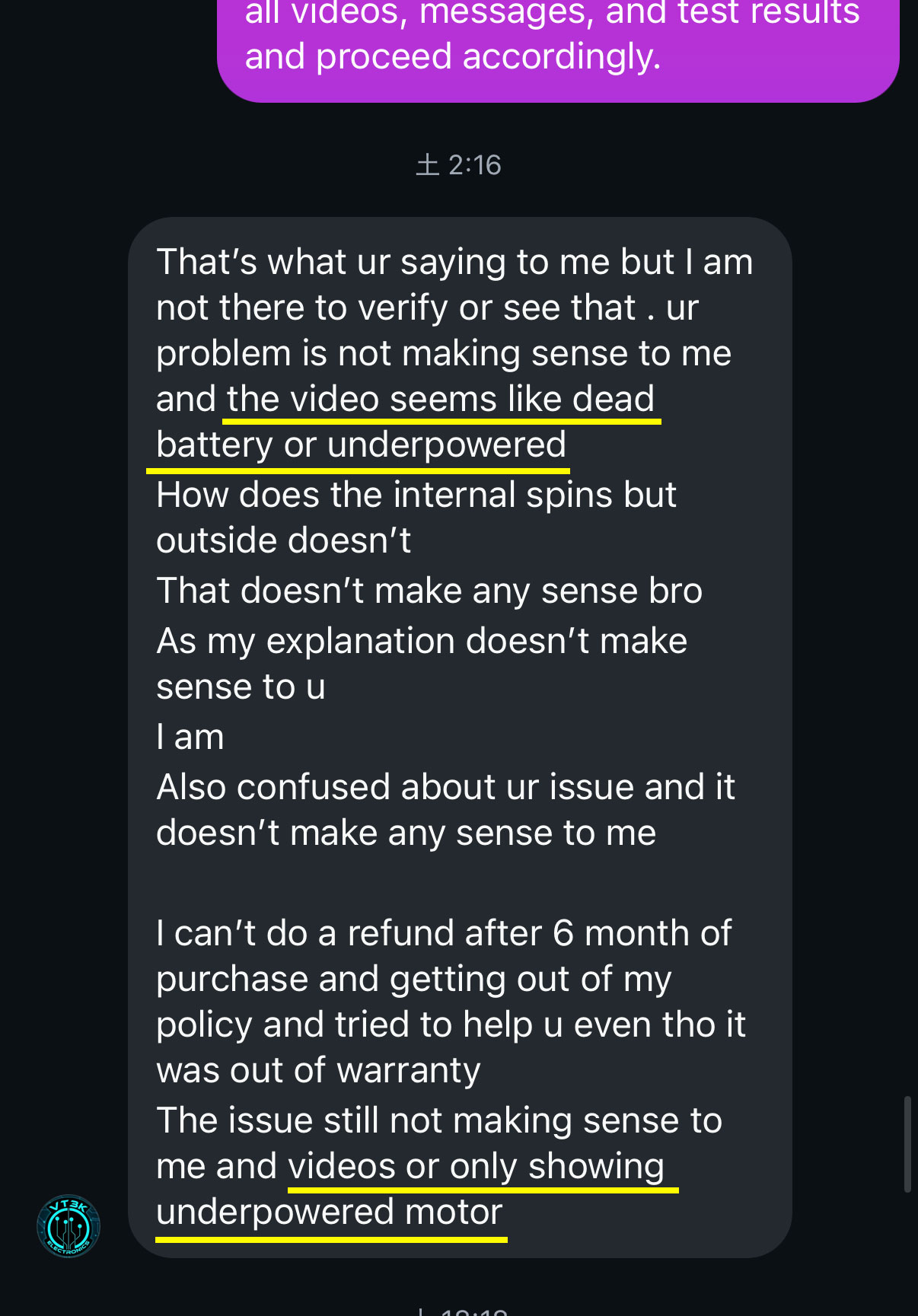
VT3K stated that the videos appeared to show a dead battery, underpowered setup, or insufficient power delivery.
However, I had already tested multiple fully charged batteries, multiple receivers, and multiple ESCs during the comparison testing process.
Other motors continued to operate normally using the same electronics and batteries.
Because of this, I was unable to understand how battery or power delivery could explain why only the VT3K motors displayed the issue.
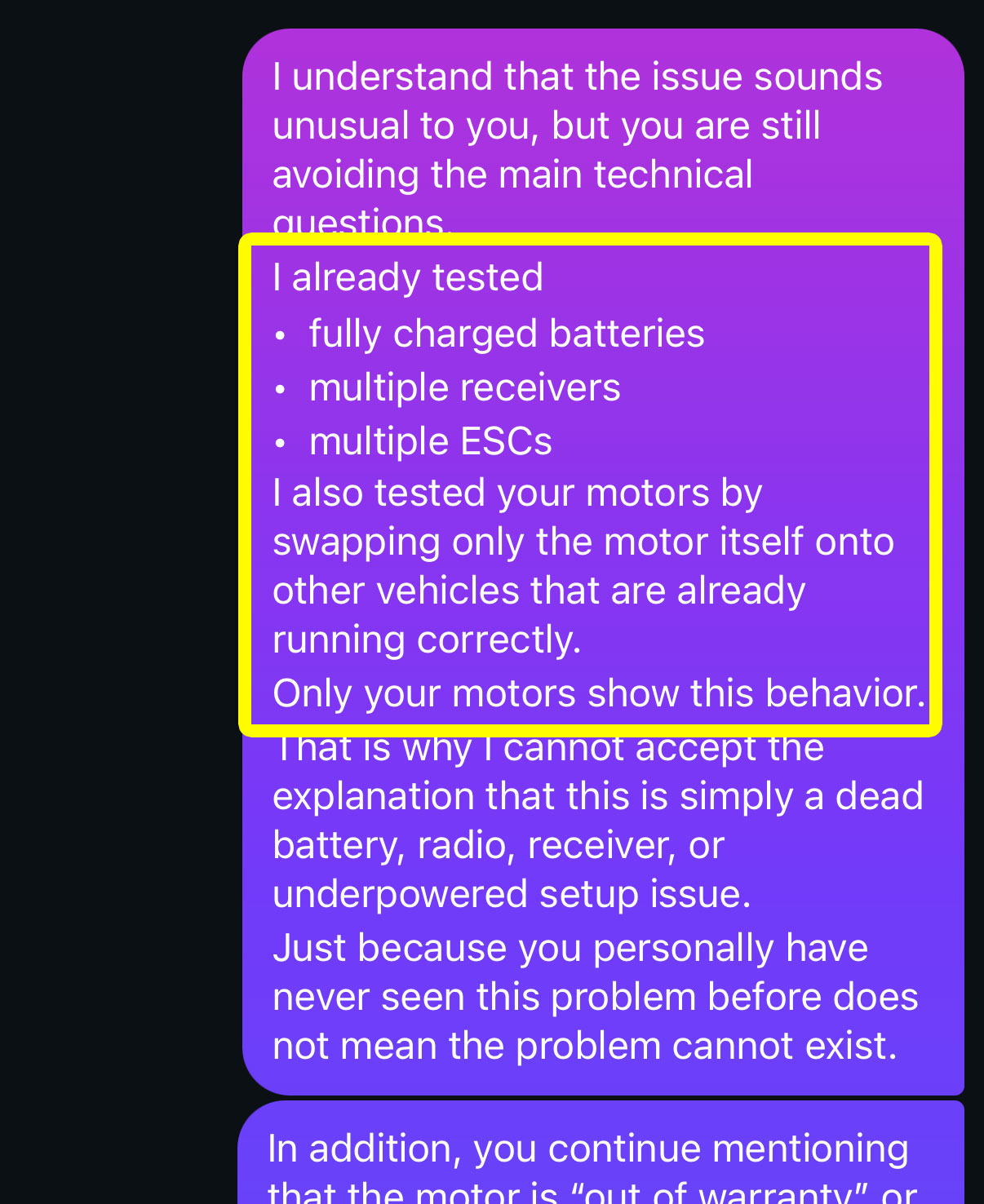
In the same follow-up message, I also reiterated that I could not find any clearly stated warranty duration on the product page.
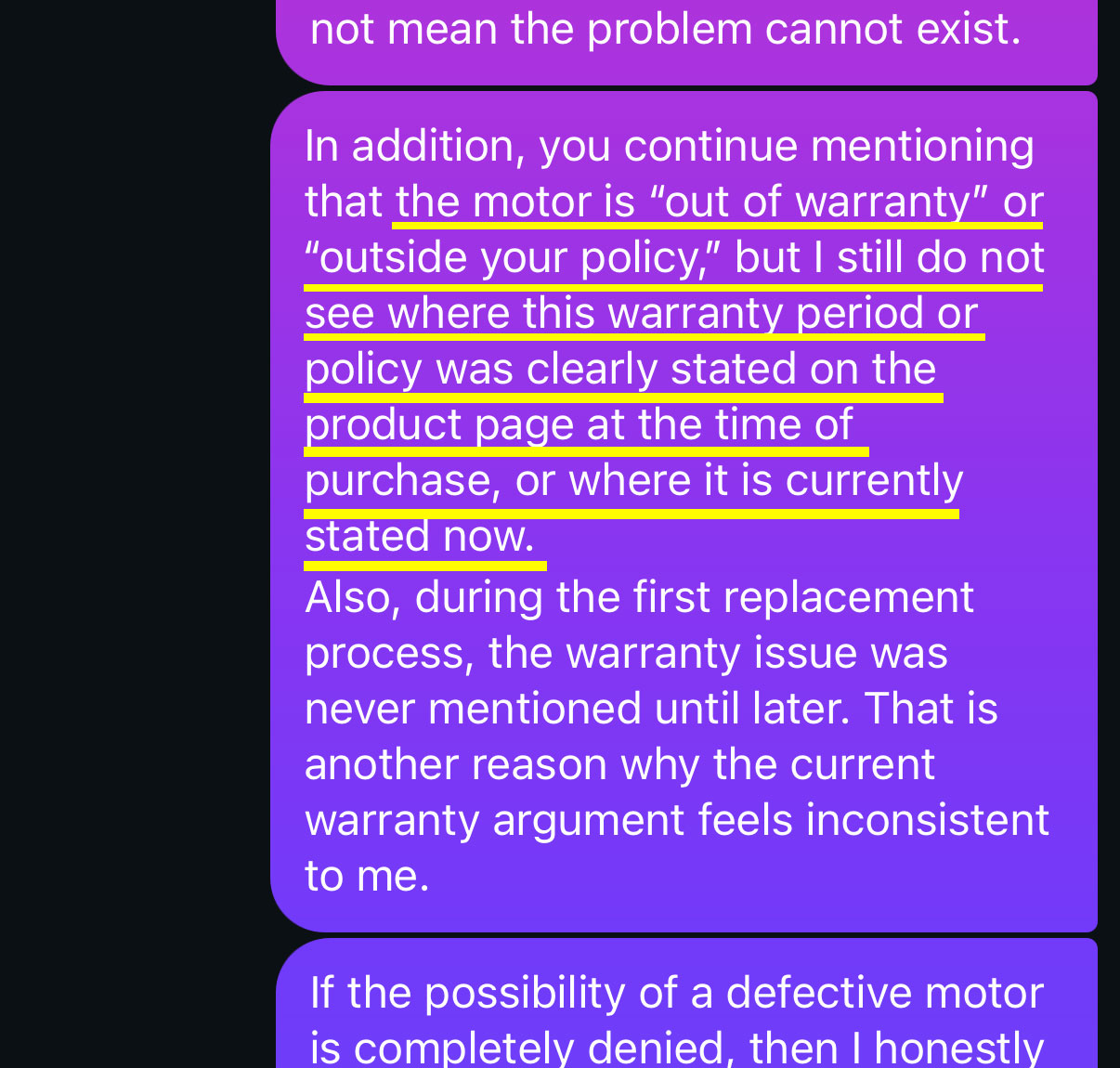
Warranty Information on the Product Page
I was unable to find any clearly stated warranty period on the product page at the time of writing.
Without a clearly defined warranty period, it is difficult for customers to know what warranty coverage applies at the time of purchase.
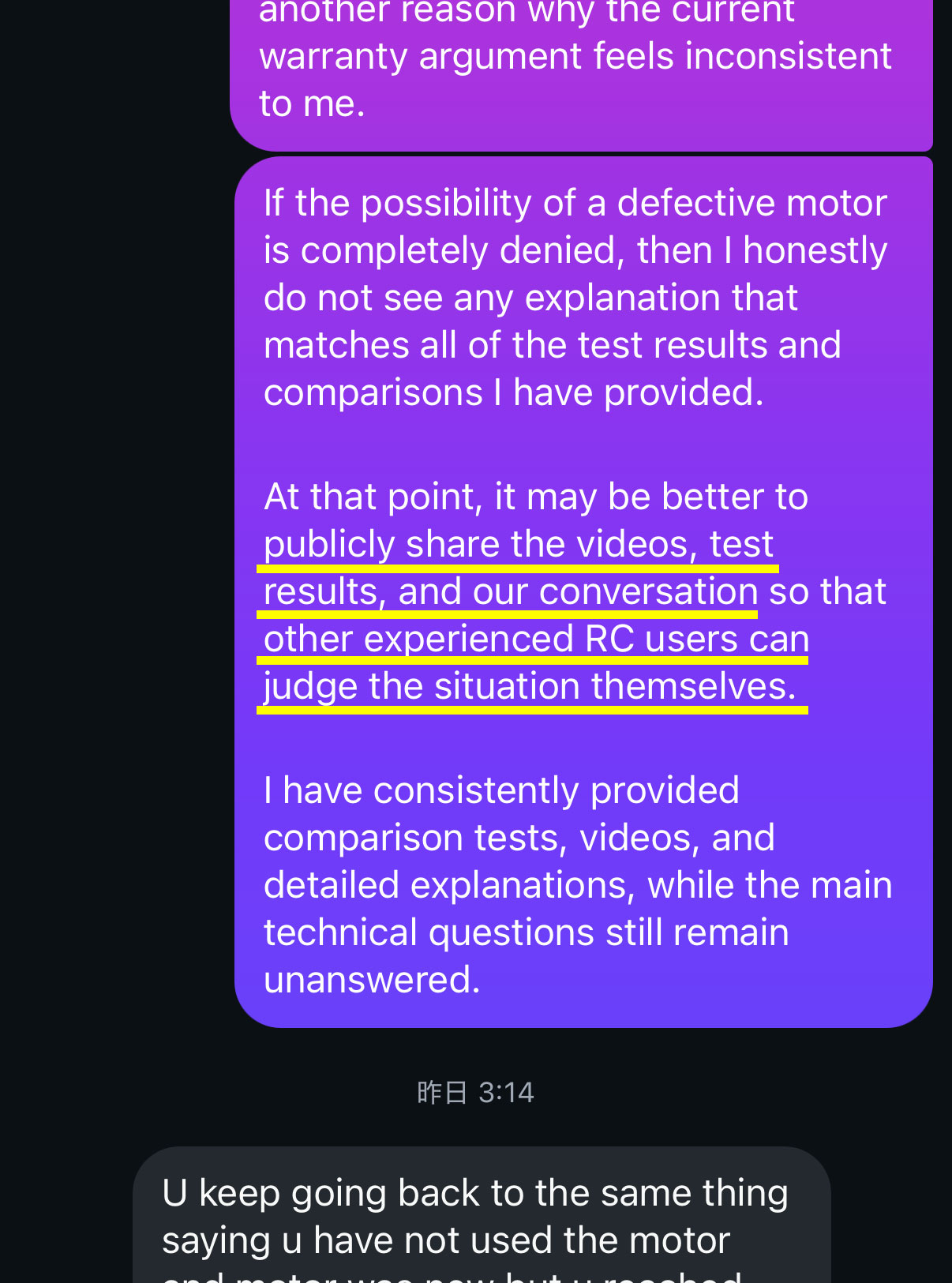
Public Review Proposal
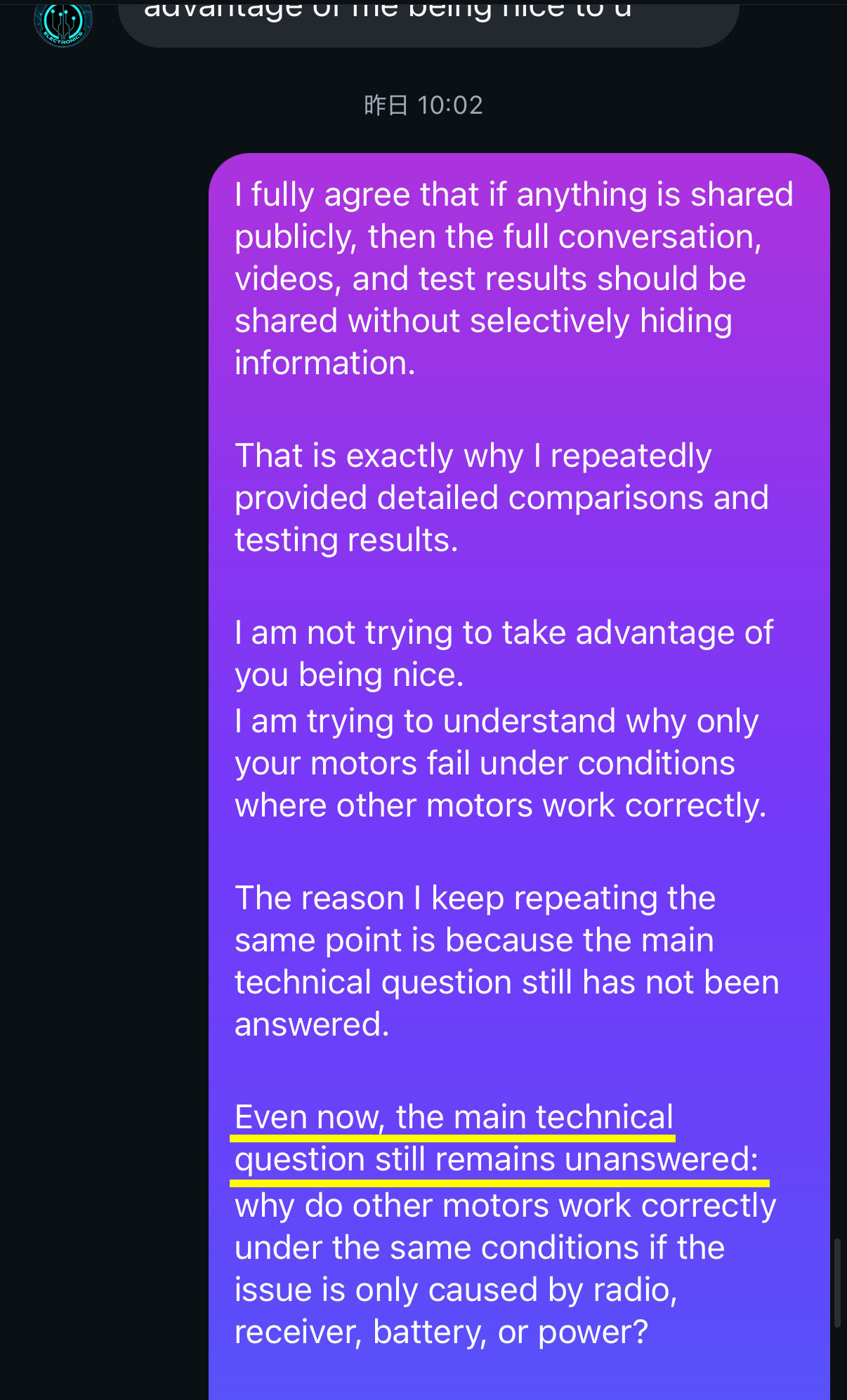
Because the technical questions remained unresolved, I suggested publicly sharing the test videos, comparison results, and support conversation so that experienced RC users could review the information and form their own conclusions.
Screenshots of that discussion are included below.
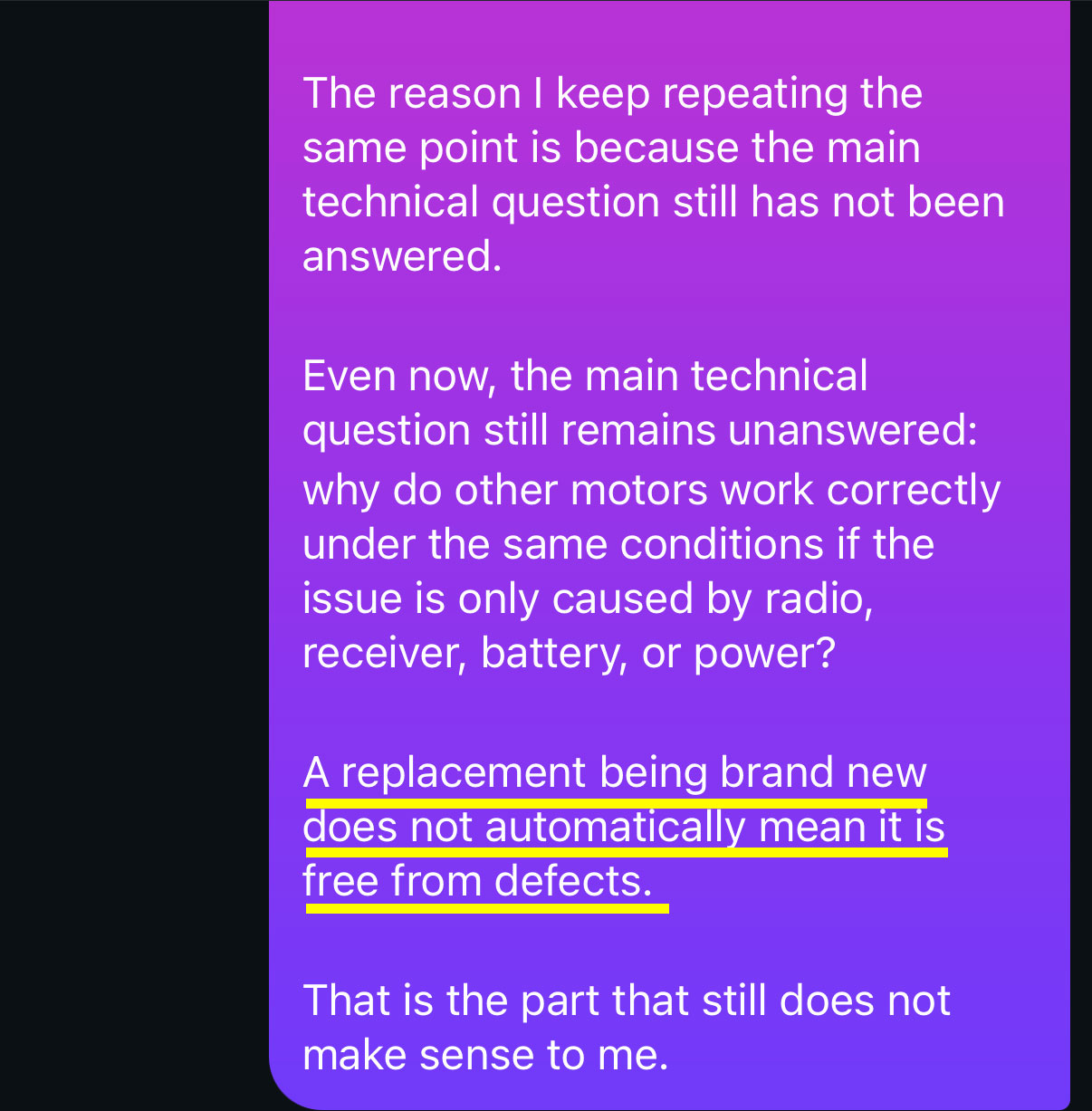
VT3K responded that if anything was shared publicly, the entire conversation should be included rather than selected excerpts.
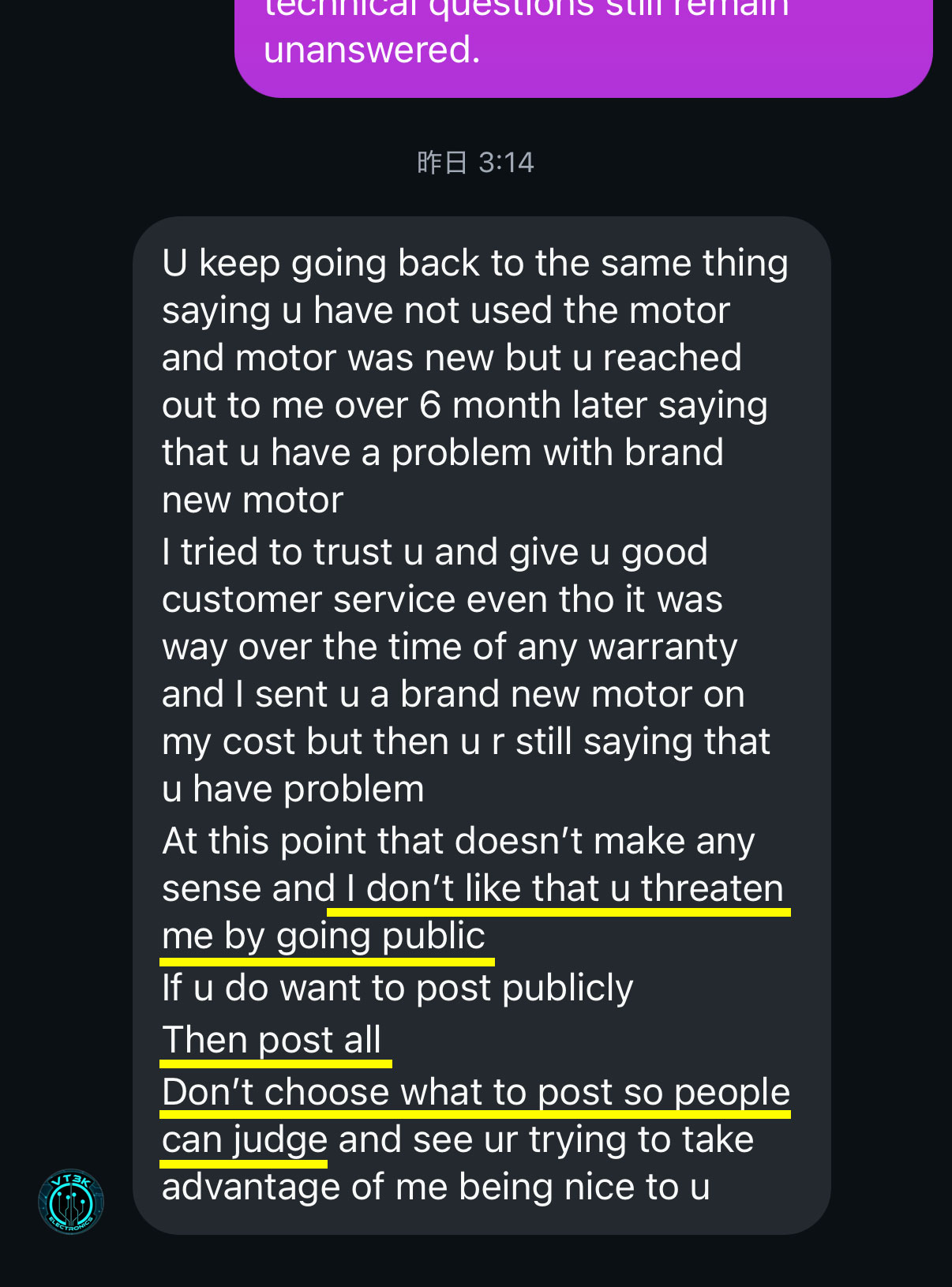
I agreed that any public review should include the full context rather than selected portions of the conversation.
I also reiterated that the primary technical question remained unanswered and that a replacement motor being brand new does not automatically mean it is free from defects.
At that point, the discussion was no longer producing a technical explanation that matched the observed test results.
For that reason, this article and the accompanying video present the full timeline, test footage, comparison testing, and relevant support conversations so readers can review the information and form their own conclusions.
Final Outcome
As of the publication of this article:
- No technical explanation was provided that accounted for all of the observed test results and comparison testing.
- No refund was offered.
- A replacement motor was provided, but it did not resolve the issue and also exhibited abnormal behavior during testing.
Readers can review the videos, screenshots, comparison tests, and conversation records and draw their own conclusions.
Personally, I was left questioning whether this outcome and support process reflect what customers should reasonably expect when purchasing a premium-priced motor.
After reviewing the entire process, I am still unable to understand why five other motors operated normally under the same conditions while only the VT3K motors exhibited problems.
Update – Community Response After Publication
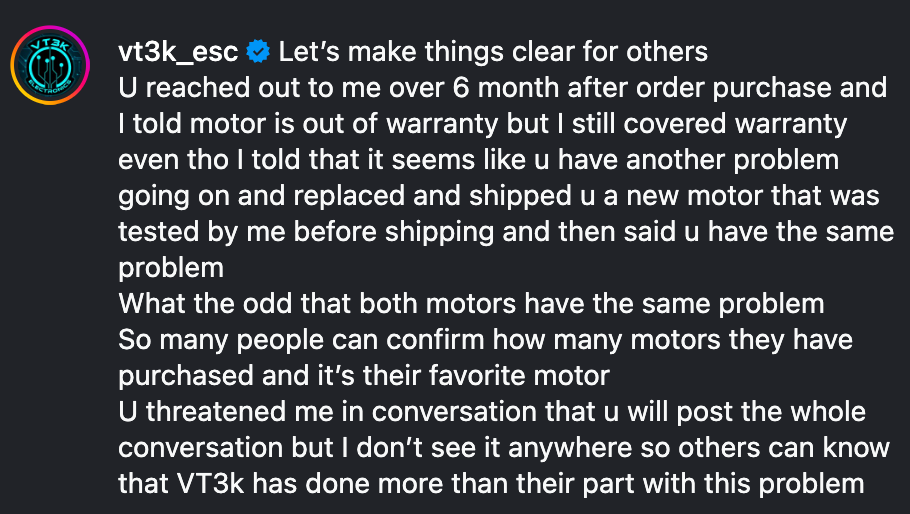
A few hours after I published the Instagram reel, VT3K responded publicly. However, once again, none of my technical questions were answered. Instead, the response focused on stating that they had done everything they could.
VT3K also claimed that I had not published the full conversation. This is incorrect. Every conversation between us had already been published in full before their comment.
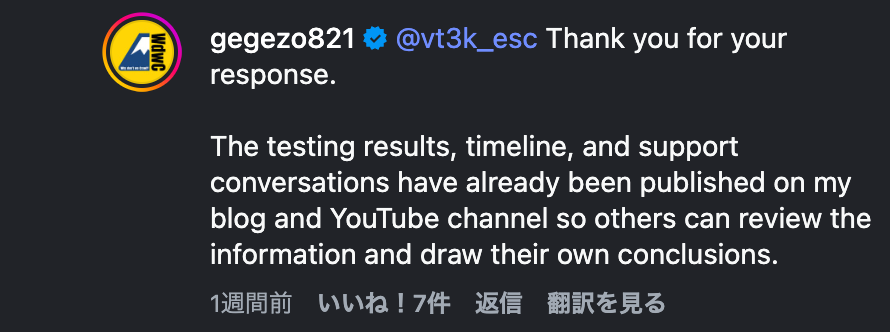
I responded calmly and simply.
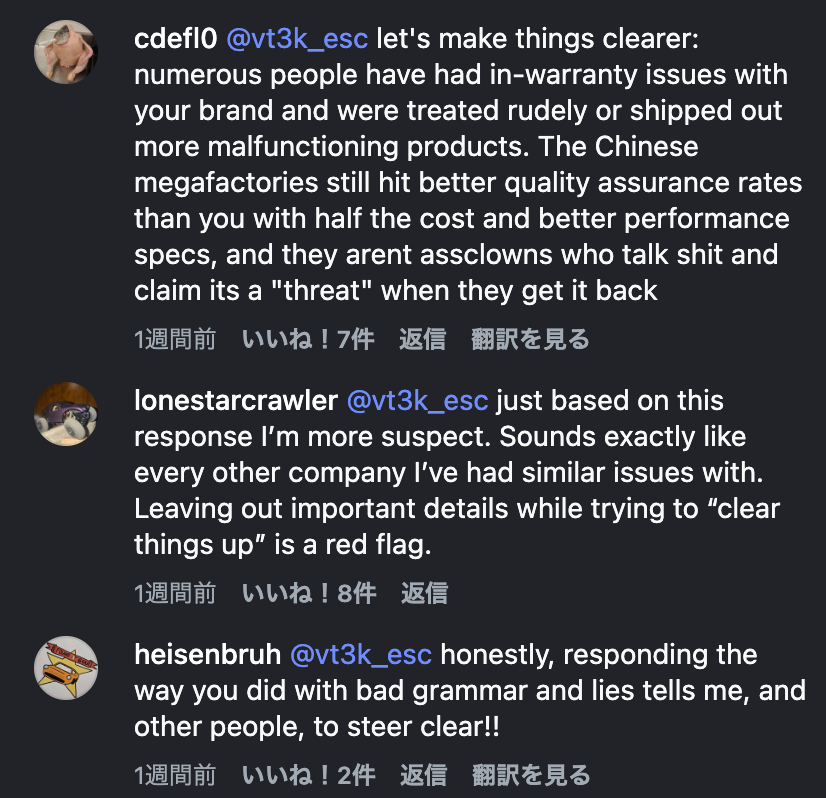
Several other users also posted critical comments directed at VT3K regarding their own experiences. None of those comments received a response from VT3K.
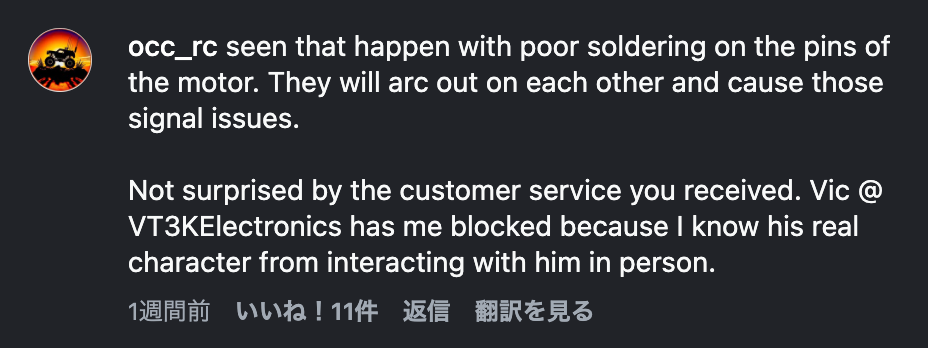

Other users also shared their own experiences with VT3K customer support during the public discussion. Some described being blocked or ghosted after requesting support.
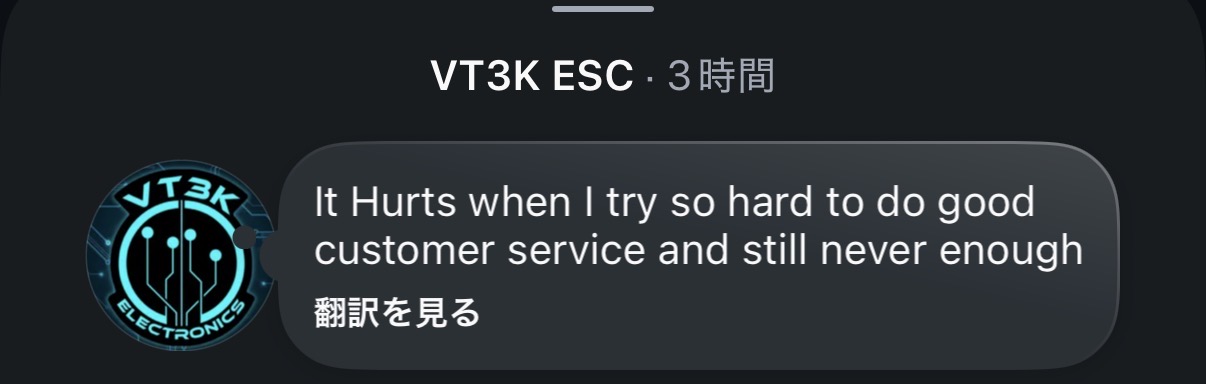
VT3K also posted the statement. However, that misses the point. The issue is not whether they tried to provide customer support. The issue is that the replacement motor they sent was also defective.
As of the latest update, the central technical question remains unanswered.
Why did five other motors operate normally under identical conditions, while both VT3K motors failed?
If VT3K provides a technical explanation supported by evidence in the future, this article will be updated accordingly. Until then, all available test results, videos, and conversations remain publicly available so readers can review them and draw their own conclusions.
SNSではブログに書いていないこともほぼ毎日投稿しています
チェック & フォローよろしくお願いします


インスタもXも@gegezo821です